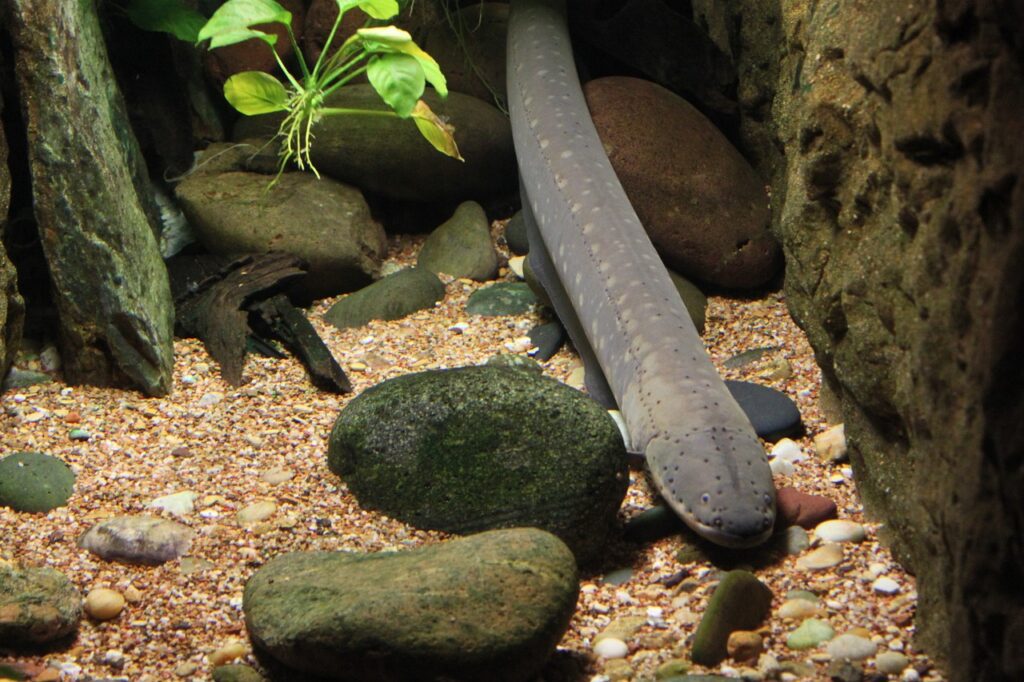
The American Eel
You may have heard of the American Eel, but do you know about its mysterious journey and the challenges it faces along the way?
From the depths of the Sargasso Sea to the freshwater rivers, these eels encounter a multitude of obstacles.
As you explore their unique adaptations and the crucial role they play in ecosystem balance, you’ll gain a deeper understanding of why their conservation is of utmost importance.
Stay tuned to uncover more about the enigmatic world of the American Eel.
Life Cycle and Migration Patterns
During their life cycle, American eels undergo an extraordinary journey marked by intricate migration patterns.
Born in the Sargasso Sea, these fascinating creatures embark on a remarkable adventure crossing vast distances to reach freshwater rivers and streams along the East Coast of North America.
As a young transparent ‘glass eel,’ you drift with the ocean currents, eventually transforming into a pigmented ‘elver’ as you enter estuaries and begin your upstream journey.
Moving mainly at night, you navigate various obstacles such as dams and pollution to reach your desired freshwater habitats.
Once you settle in these rivers and streams, you grow into a mature eel, spending several years feeding and maturing.
When it’s time to reproduce, you start another challenging journey back to the Sargasso Sea.
Swimming thousands of miles, you face predators, changing water conditions, and other threats on your way back to the place of your birth.
This incredible migration cycle showcases the resilience and determination of American eels in their quest for survival.
Habitat and Environmental Threats
American eels face significant challenges in their habitats due to various environmental threats.
These threats include pollution from agricultural runoff, industrial discharge, and plastic waste.
The degradation of water quality can impact the eels’ ability to survive and thrive in their ecosystems.
Additionally, habitat loss and fragmentation caused by dam construction and urban development pose serious risks to American eel populations.
Climate change is another pressing issue affecting American eels.
Rising temperatures and changes in precipitation patterns can alter the eels’ habitats, affecting their behavior and migration patterns.
Furthermore, these changes can disrupt the availability of food sources for the eels, leading to potential declines in their populations.
Overfishing is a significant threat to American eels as well.
Eels are often harvested for consumption, both domestically and internationally, leading to concerns about the sustainability of eel populations.
Implementing proper management strategies and regulations is crucial to ensure the long-term survival of American eels in the face of these environmental threats.
Conservation Efforts and Initiatives
Efforts to conserve and protect the American eel population have been implemented through various initiatives and programs.
One key conservation strategy is the regulation of fishing practices to prevent overfishing.
Regulations such as catch limits, size restrictions, and fishing season closures aim to ensure sustainable eel populations.
Additionally, habitat restoration projects play a crucial role in safeguarding eel habitats.
Restoration efforts focus on improving water quality, restoring wetlands, and removing barriers to eel migration, enhancing the overall health of eel populations.
Collaborative initiatives involving government agencies, conservation organizations, researchers, and local communities are also instrumental in eel conservation.
These partnerships work towards developing comprehensive conservation plans, conducting research on eel populations, and raising awareness about the importance of eel conservation.
Moreover, educational programs and outreach efforts help engage the public in conservation activities and promote sustainable practices to protect the American eel for future generations.
Through these combined efforts, progress is being made in safeguarding the American eel and its critical habitats.
Unique Adaptations and Behavior
Regulations and restoration efforts not only contribute to safeguarding the American eel population but also highlight their unique adaptations and behavior in their natural habitats.
One fascinating adaptation of the American eel is their ability to migrate incredible distances.
They’re known to travel thousands of miles from their freshwater habitats to the Sargasso Sea to spawn, displaying remarkable navigation skills.
American eels also exhibit a fascinating life cycle known as catadromy, where they spawn in saltwater but live most of their lives in freshwater.
This unique behavior sets them apart from other eel species.
Furthermore, American eels have a remarkable sense of smell, aiding them in finding food and mates over long distances in murky waters.
Their elongated bodies and snake-like movements allow them to navigate through various aquatic environments with ease.
This, combined with their adaptability to different water conditions, makes the American eel a resilient and intriguing species to study in the wild.
Significance in Ecosystems
Within ecosystems, the American eel plays a crucial role in maintaining the balance and diversity of aquatic environments.
As a predator, eels help control the populations of smaller fish and invertebrates, preventing any one species from becoming too dominant.
This predation also aids in regulating food webs and energy flow within freshwater and estuarine habitats.
Additionally, American eels are an essential food source for many other animals, including birds of prey, larger fish, and mammals.
By serving as a link in the food chain, eels contribute to the overall health and stability of the ecosystem.
Moreover, eels play a significant role in nutrient cycling.
When eels migrate between freshwater and marine environments, they transport nutrients from one habitat to another.
This movement of nutrients helps fertilize different areas, promoting the growth of aquatic vegetation and supporting diverse communities of organisms.
In conclusion, the American eel’s remarkable life cycle, migration patterns, and adaptations highlight its importance in aquatic ecosystems.
Facing threats like pollution and habitat loss, conservation efforts are crucial to protect these fascinating creatures.
By understanding and preserving the unique characteristics of the American eel, we can ensure the health and balance of our waterways for future generations to enjoy.
Stay informed and engaged in efforts to safeguard these incredible species.