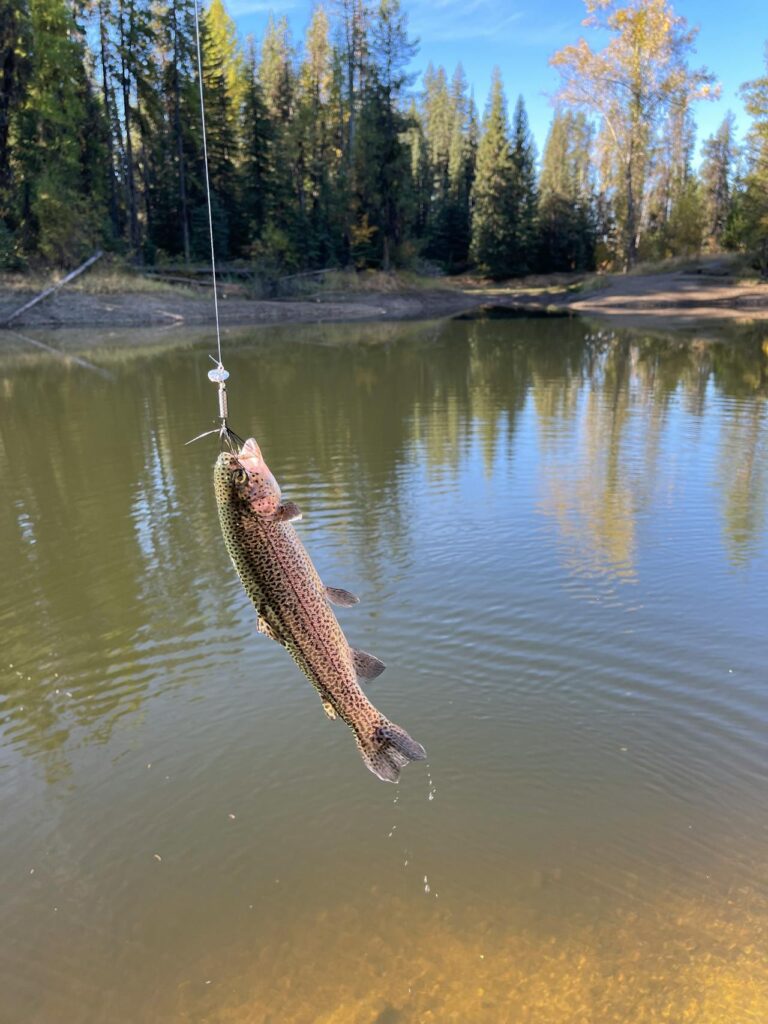
Best Fishing Line for Trout
When it comes to trout fishing, choosing the right line can significantly impact your success.
You might think monofilament is the best choice because it’s user-friendly, but don’t overlook fluorocarbon and braided options.
Each type has its strengths and weaknesses and understanding these can help you make an informed decision.
So, what should you consider when selecting your fishing line for trout? Let’s explore the details.
Understanding Trout Behavior and Habitat
To effectively catch trout, it’s crucial to understand their behavior and habitat.
These fish thrive in cool, clear waters, often found in streams, rivers, and lakes.
They prefer areas with plenty of cover, like rocks, fallen trees, and vegetation, where they can hide from predators.
Pay attention to the time of day; trout are more active during early mornings and late afternoons.
Weather conditions also impact their feeding patterns.
On overcast days, they venture closer to the surface, making them easier to catch.
During warmer months, they seek deeper, cooler waters.
Types of Fishing Lines for Trout
Choosing the right fishing line is essential for successfully catching trout, and there are three main types to consider: monofilament, fluorocarbon, and braided lines.
Monofilament lines are popular for their stretch and ease of use, making them great for beginners.
Fluorocarbon lines are nearly invisible underwater, which can be a game-changer in clear water conditions.
They also sink faster than monofilament, allowing for better depth control.
Braided lines are known for their strength and sensitivity, providing excellent feedback when trout nibble on your bait.
Each type has its strengths, so think about your fishing style and the specific conditions you’ll face.
Monofilament Line: Pros and Cons
Monofilament line is a popular choice among anglers for its unique blend of flexibility and ease of use.
One of its biggest advantages is that it’s generally more forgiving, allowing for better knot tying and easier casting.
You’ll appreciate its buoyancy, which helps when fishing topwater lures. It’s also less expensive compared to other line types.
However, there are downsides. Monofilament can stretch significantly, which might lead to missed strikes or reduced sensitivity.
It’s also more susceptible to UV damage and abrasion, especially in rocky environments.
If you’re fishing in clear waters, its visibility can be a disadvantage, potentially spooking wary trout.
Weighing these pros and cons will help you decide if monofilament is right for your fishing needs.
Fluorocarbon Line: Pros and Cons
While many anglers swear by fluorocarbon line for its low visibility and sensitivity, it’s important to weigh its advantages and drawbacks.
One major pro is its ability to sink quickly, making it ideal for fishing in deeper waters.
Its abrasion resistance also stands out, helping you tackle rocky or snag-filled environments.
However, fluorocarbon can be stiffer than monofilament, which may affect casting distance and accuracy, particularly for beginners.
Additionally, it tends to be more expensive, which could strain your budget.
Lastly, while it’s less prone to UV degradation, it can become brittle over time.
Ultimately, consider your fishing style and conditions to decide if fluorocarbon line is the right choice for you.
Braided Line: Pros and Cons
For many anglers, braided line stands out as a popular choice due to its strength and versatility.
It offers incredible sensitivity, allowing you to detect even the slightest bites.
Plus, its thin diameter means you can spool more line on your reel, helping you reach deeper waters.
However, there are some downsides.
Braided line can be more visible in clear water, which might spook cautious trout.
It also tends to tangle more easily, potentially leading to frustrating knots.
Finally, while its strong, it doesn’t have the stretch of monofilament or fluorocarbon, making it less forgiving on lighter tackle.
Weigh these pros and cons to decide if braided line fits your trout fishing strategy.
Choosing the right fishing line for trout can make all the difference in your success on the water.
Whether you prefer the ease of monofilament, the low visibility of fluorocarbon, or the strength of braided line, each type has its advantages.
Consider your fishing conditions and personal preferences to find the best fit for you.
With the right line in hand, you’ll enhance your chances of landing that prized trout and enjoying a great day of fishing.