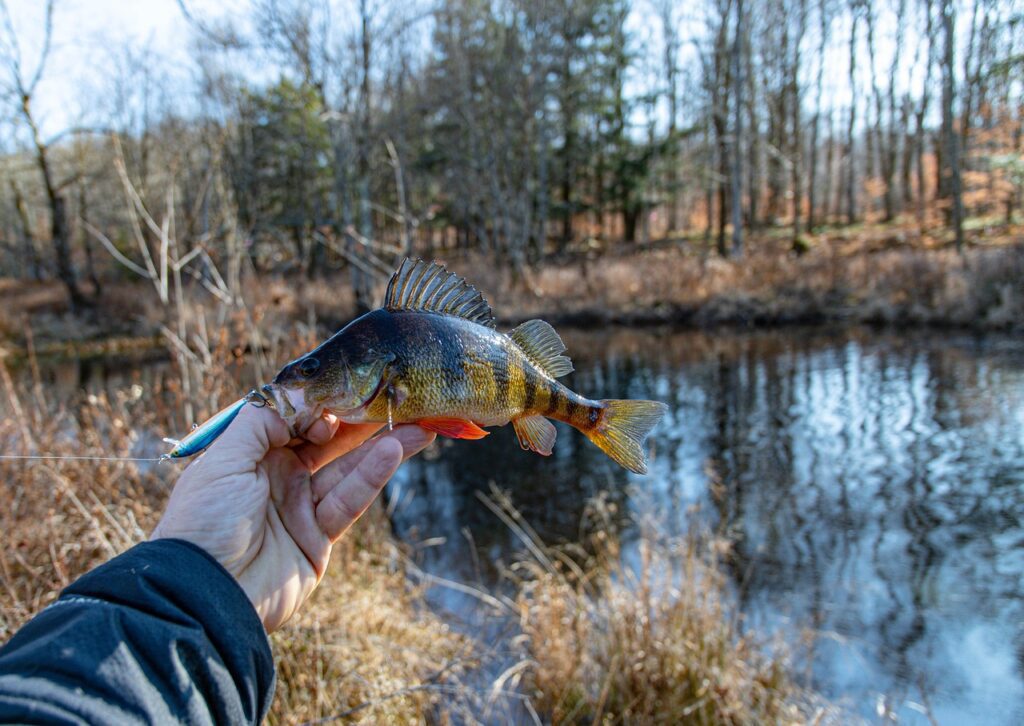
Tips for Perch Fishing
When heading out for a day of perch fishing, making sure you have the right gear and techniques can make all the difference between a successful catch and a frustrating outing.
From choosing the right bait to mastering the best techniques for enticing those elusive perch, there’s a whole world of tips and tricks waiting for you to discover.
So, grab your gear, head to the water, and set yourself up for a rewarding day on the hunt for perch.
Gear Essentials
When perch fishing, ensure you have the necessary gear essentials ready for a successful angling experience.
Start by choosing a light to medium-action spinning rod paired with a reel that can hold 6–8-pound test line.
This setup will give you the flexibility needed to handle the varying sizes of perch you may encounter.
Make sure to have a variety of hooks ranging from size 6 to 12 to accommodate different bait options and fish sizes.
A selection of live bait such as minnows, worms, or insect larvae works well for perch.
Additionally, pack a few different colors and sizes of jigs and soft plastic baits to experiment with what the perch are biting on that day.
A pair of needle-nose pliers for hook removal, a small tackle box to keep everything organized, and a reliable fishing net to land your catch are also must-have gear items.
By having these essentials at the ready, you’ll be well-prepared for a productive day of perch fishing.
Ideal Locations
Explore prime habitats like rocky shorelines and underwater structures for optimal perch fishing locations.
Perch are often found near rocks, as these provide cover for them to hide and ambush prey.
Look for areas with submerged boulders, fallen trees, or docks where perch like to congregate.
Rocky shorelines offer a great opportunity to catch perch, as they provide both shelter and easy access to food sources like insects and small fish.
Additionally, underwater structures such as reefs, sunken boats, or artificial habitats can attract schools of perch seeking protection and foraging grounds.
Another ideal location for perch fishing is near vegetation such as water plants or lily pads.
These areas serve as nurseries for juvenile fish and attract larger perch looking for an easy meal.
Pay attention to the depth of the water as well, as perch tend to swim in shallower areas close to the shore.
Bait Selection
To increase your chances of a successful perch, catch, carefully select the right bait that will attract these fish to your hook.
Perch are known to have a diverse diet, so having a variety of bait options can be beneficial.
Live bait such as minnows, worms, and insects are popular choices among anglers targeting perch. These natural baits give off scents that can entice perch to bite.
Additionally, artificial baits like soft plastic lures, small crankbaits, and jigs can also be effective in catching perch.
These baits come in various colors and shapes, allowing you to experiment and see what works best on any given day.
When selecting bait for perch fishing, it’s essential to consider the water conditions and the time of year.
In murky waters, baits with bright colors or baits that create noise can help attract perch.
During colder months, using smaller bait sizes or slowing down your presentation can increase your chances of getting a bite.
Techniques and Strategies
Consider varying your fishing techniques and strategies to adapt to different conditions and increase your chances of a successful perch catch.
When targeting perch, one effective technique is vertical jigging. Drop your bait down to the desired depth, then jig it up and down to mimic the movement of prey.
This can be particularly effective in deeper waters or when the perch are holding near the bottom.
Another strategy is casting and retrieving. Use small spinners, jigs, or crankbaits and reel them in slowly, pausing occasionally to mimic injured baitfish.
This method works well in shallower areas or when perch are actively feeding near the surface.
Additionally, try experimenting with different colors and sizes of lures to see what the perch are most responsive to on a given day.
Pay attention to the water clarity, weather conditions, and time of day, as these factors can influence which techniques will be most successful.
Handling and Cooking Tips
For optimal flavor and freshness, ensure you properly handle and cook your perch catch using these helpful tips for Perch Fishing.
Once you’ve caught your perch, make sure to clean it promptly.
Remove the scales, guts, and gills, and rinse the fish thoroughly with cold water.
If you plan to store the perch before cooking, keep it on ice to maintain its quality.
When it comes to cooking perch, simplicity is key.
Pan-frying perch fillets is a popular and delicious method.
Coat the fillets in a seasoned flour mixture and cook them in a hot skillet with oil until golden brown on each side.
Another tasty option is to bake perch with herbs, lemon, and butter for a flavorful and healthy meal.
To ensure your perch is cooked to perfection, aim for an internal temperature of 145°F (63°C).
Overcooking can result in dry and rubbery fish, so keep a close eye on it while cooking.
With these handling and cooking tips, you’ll be able to enjoy the delicate flavor of perch at its best.
Now that you have the right gear, know where to find perch, and have mastered the best bait and techniques, you’re ready to tackle perch fishing like a pro.
Remember to handle your catch with care and enjoy cooking up a delicious meal with your fresh perch.
Here are some tips for perch fishing that can help you out!
Get out there and start reeling in those tasty fish!