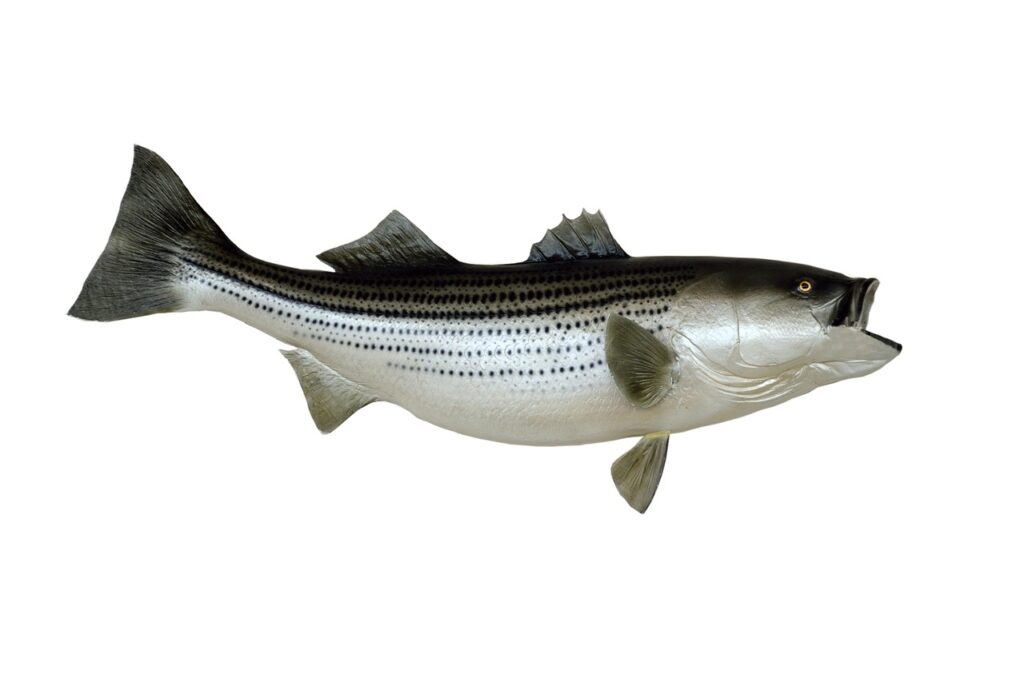
Fishing for Stripe Bass
As you gear up for your next striped bass fishing adventure, it’s crucial to understand the unique behaviors and preferred habitats of these elusive fish while fishing for stripe bass.
Whether you’re casting your line in the bustling waters of the Chesapeake Bay or the serene settings along Cape Cod, choosing the right equipment and mastering effective techniques can significantly enhance your chances of a successful catch.
Stay tuned as we explore the essential gear and top strategies to land that trophy striper.
Understanding Striped Bass Behavior and Habitat
Understanding the behavior and habitat of striped bass is crucial for any successful angler.
These fish thrive in both freshwater and saltwater environments, adapting easily as they migrate.
You’ll find them in coastal areas during spring and fall, moving upstream into rivers to spawn.
During summer and winter, they prefer deeper, cooler waters.
Stripers are particularly responsive to changes in water temperature and will shift locations accordingly.
They’re also structure-oriented, often found near underwater features like sunken ships, rock beds, and drop-offs.
Recognizing these habits helps you predict their movements.
Focus on tidal estuaries and river mouths as these areas provide abundant food sources, which attract stripers.
Essential Gear and Equipment for Striper Fishing
Now that you know where to find striped bass, let’s look at the gear you’ll need to start fishing for them.
First off, you’ll need a sturdy rod, ideally 7-9 feet long, suited for casting heavy lures or bait.
A spinning or baitcasting reel that can handle 15–30-pound test line is crucial, as stripers put up a strong fight.
Don’t forget durable braided line for better control and sensitivity.
You’ll also want a selection of lures—think swimbaits, jigs, and topwater plugs—to attract these predators.
Finally, invest in a good net and a pair of pliers for safe, efficient catch and release.
With this equipment, you’re all set to reel in some impressive stripers!
Top Techniques for Catching Striped Bass
Although you’re equipped with the best gear, mastering a few key techniques can significantly enhance your success in catching striped bass.
Firstly, you’ll want to master the art of live lining.
This involves using live bait like eels or bunker, letting them swim freely to attract the bass.
It’s crucial to keep your line tight enough to feel the bait but loose enough to allow natural movement.
Next, try jigging, which involves a vertical presentation with lures that mimic the movement of a fish.
You need to perfect a rhythmic jigging motion to create an irresistible target.
Lastly, don’t overlook the importance of timing.
Striped bass are more active during dusk and dawn, so plan your trips accordingly to increase your chances.
Best Locations for Striped Bass Fishing in North America
While mastering techniques is crucial, knowing where to fish is just as important when targeting striped bass.
You’ll find some of the best spots on the East Coast.
Start your adventure at the Chesapeake Bay, renowned for its prolific spring striper run.
Don’t miss the Hudson River in New York, where the fishing heats up as the bass spawn.
Moving north, the Cape Cod area offers incredible surfcasting opportunities, especially around the Cape Cod Canal.
For a true fishing haven, head to Montauk Point, New York, famed not just for its scenic beauty but also for being a striper hotspot.
Over on the West Coast, the San Francisco Bay and Sacramento River Delta can’t be overlooked for their vibrant striper populations.
Seasonal Patterns and Timing for Optimal Fishing
Understanding the seasonal patterns of striped bass can significantly enhance your fishing success.
In spring, they migrate towards river mouths and coastal areas to spawn, making this the perfect time to cast your lines in these active zones.
You’ll find them in shallow waters, so boat fishing isn’t always necessary.
Come summer, the bass move deeper to escape the heat.
Target them early in the morning or later in the evening when they’re feeding closer to the surface.
Fall brings another peak as they bulk up for winter, roaming back towards estuaries and coastlines.
Winter fishing is tough but not impossible; look for deep, slow-moving waters where they conserve energy.
Timing’s everything, so plan your trips around these shifts.
Now you’re equipped with the essentials to master striped bass fishing!
Remember, understanding their behavior and choosing the right gear will elevate your game.
Don’t forget to experiment with different techniques and hit the prime spots like Chesapeake Bay and Cape Cod.
Keep an eye on the seasonal patterns; early mornings and late evenings are your best bet.
Get out there, apply what you’ve learned, and enjoy the thrill of reeling in those impressive stripers while fishing for stripe bass!